
Cato the Younger
Last updated: August 15, 2025
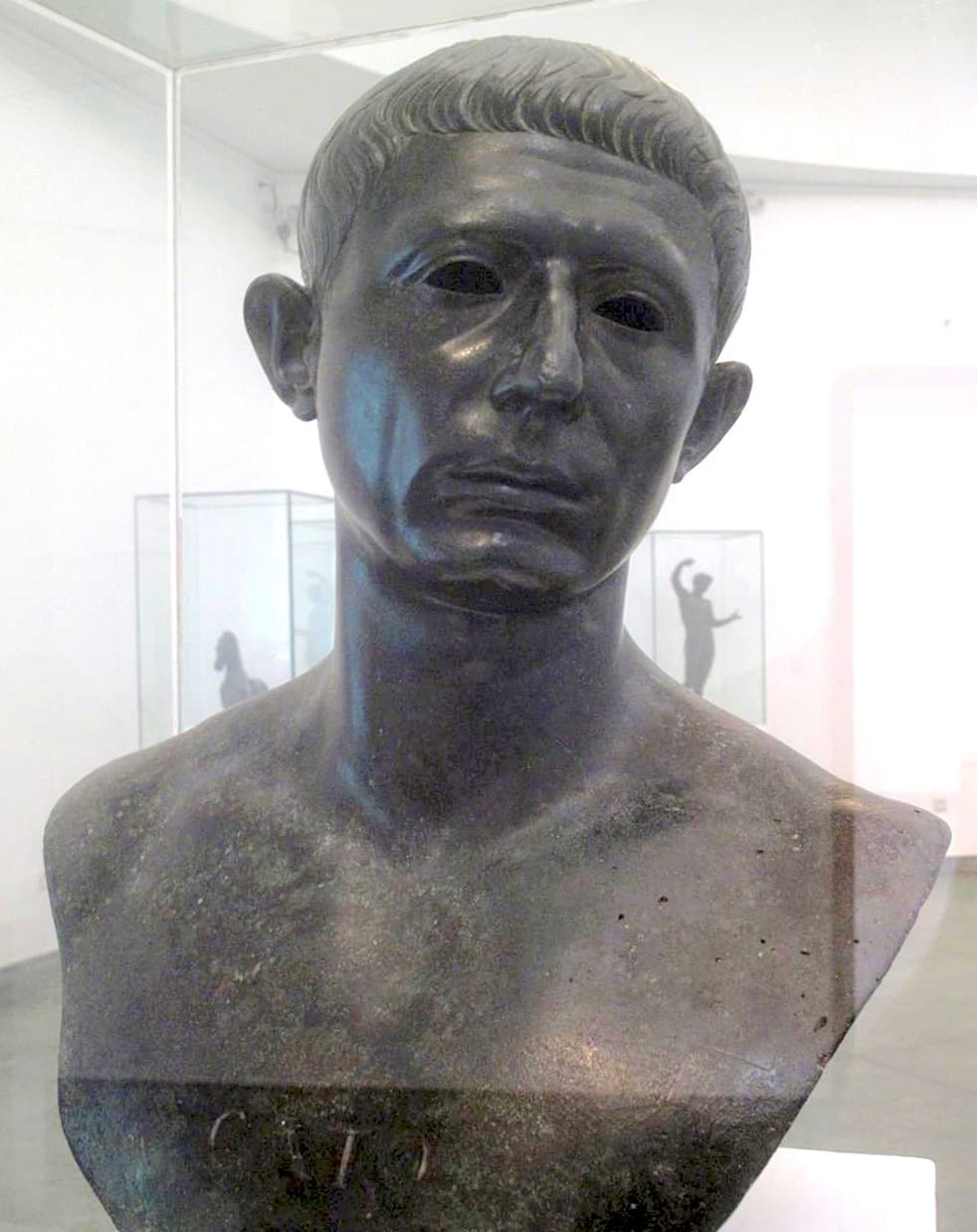
__LINK_Marcus Porcius Cato Uticensis_cato-the-younger__ (95–46 BCE), known as Cato the Younger, was an influential conservative Roman senator and one of the most famous practitioners of Stoic philosophy in the late Roman Republic. Born into the prestigious Porcia family, he was the great-grandson of Cato the Elder and became renowned for his unwavering moral principles and incorruptible character. As a politician, Cato consistently opposed the rise of powerful military commanders like Pompey, Caesar, and Crassus, viewing them as threats to republican liberty. His inflexible adherence to traditional Roman values and Stoic principles made him a symbol of republican virtue, though his uncompromising stance contributed to the political tensions that led to civil war. When Caesar's victory became inevitable, Cato chose suicide over submission, preferring death to living under tyranny. His dramatic end in Utica made him a martyr for republican ideals and Stoic philosophy, inspiring later generations including the American Founding Fathers.
Life Story
Noble Birth and Early Tragedy
Marcus Porcius Cato was born in 95 BCE into one of Rome's most distinguished families, the Porcii Catones. He was the great-grandson of the legendary Cato the Elder, whose moral authority and conservative values had made him a symbol of traditional Roman virtue. Born to Marcus Porcius Cato and Livia, Cato's early life was marked by privilege but also by profound loss.
When Cato was still very young, his father died, leaving him and his half-brother Quintus Servilius Caepio to be raised by their uncle, Marcus Livius Drusus. This early experience of loss would shape Cato's character, instilling in him a deep appreciation for the fragility of life and the importance of living according to principle rather than circumstance. His uncle Drusus was a prominent politician who advocated for Italian rights, exposing young Cato to the complexities of Roman politics from an early age.
Education in Stoic Philosophy
From his youth, Cato was drawn to Stoic philosophy, which emphasized virtue as the only true good and taught that external circumstances could not affect one's inner tranquility. Unlike many Roman aristocrats who studied philosophy as an intellectual exercise, Cato embraced Stoicism as a complete way of life. He studied the works of Zeno of Citium, Cleanthes, and Chrysippus, but more importantly, he sought to embody their teachings in his daily conduct.
His commitment to Stoic principles was evident even in childhood. Ancient sources tell us that he was unusually serious and principled for his age, refusing to flatter or compromise his beliefs even when it would have been advantageous to do so. This early dedication to philosophical principles would become the defining characteristic of his entire life, earning him both admiration and criticism from his contemporaries.
Military Service and Character Formation
As a young man, Cato served in the Roman military, where his character was further tested and refined. During his service in the Social War and later campaigns, he demonstrated the same unwavering commitment to duty and principle that would characterize his political career. Unlike many aristocratic officers who used military service as a stepping stone to political advancement, Cato genuinely cared about the welfare of his soldiers and the honor of Rome.
His military experiences reinforced his belief in the importance of discipline, courage, and self-sacrifice. He learned to endure hardship without complaint and to make difficult decisions based on principle rather than personal advantage. These lessons would prove invaluable when he later faced the moral challenges of Roman politics during the republic's final crisis.
Entry into Politics and Early Principles
Cato began his political career by serving as quaestor in 64 BCE, where he immediately distinguished himself by his scrupulous honesty and attention to duty. While other magistrates often used their positions to enrich themselves or advance their careers, Cato treated his office as a sacred trust. He meticulously managed public finances, refused all bribes, and insisted on the highest standards of conduct from his subordinates.
His reputation for integrity quickly spread throughout Rome, earning him both respect and enemies. Many politicians found his inflexibility frustrating, as he refused to engage in the traditional practices of compromise and mutual favor-trading that kept the Roman political system functioning. However, his moral authority was undeniable, and even his opponents acknowledged his genuine commitment to the public good.
Tribune and the Catilinarian Conspiracy
As tribune of the plebs in 62 BCE, Cato faced his first major political crisis when the Catilinarian conspiracy threatened the stability of the Roman state. When the Senate debated the fate of the conspirators, Cato delivered a powerful speech arguing for their execution, directly opposing Julius Caesar's proposal for life imprisonment. His speech was so compelling that it swayed the Senate to vote for the death penalty.
This moment established Cato as a major political force and demonstrated his willingness to take unpopular but principled stands. His opposition to Caesar during this crisis also marked the beginning of their lifelong political rivalry. While Caesar represented the populist tradition that appealed to the masses through bread and circuses, Cato embodied the conservative tradition that emphasized duty, virtue, and the rule of law.
Opposition to the First Triumvirate
When Pompey, Caesar, and Crassus formed their secret political alliance (later called the First Triumvirate) in 60 BCE, Cato immediately recognized the threat it posed to republican government. He understood that when powerful individuals combined their resources and influence, they could effectively bypass the traditional checks and balances of the Roman constitution.
Cato became the leader of the opposition to this alliance, using every legal and procedural tool at his disposal to frustrate their plans. He employed filibusters, religious objections, and other parliamentary tactics to delay or prevent their legislation. While his opponents criticized him as obstructionist, Cato saw himself as defending the fundamental principles of republican government against those who would subvert it for personal gain.
Cyprus Mission and Moral Authority
In 58 BCE, Cato was sent to annex the island of Cyprus, a mission that was partly intended to remove him from Rome during a critical political period. However, Cato turned this exile into a demonstration of his principles. He conducted the annexation with scrupulous honesty, refusing to enrich himself or his associates despite numerous opportunities to do so.
When he returned to Rome with the Cypriot treasury intact and properly accounted for, his reputation for integrity was further enhanced. In an age when provincial commands were typically seen as opportunities for personal enrichment, Cato's conduct stood out as a remarkable example of public service. This mission solidified his position as the moral conscience of the Roman Senate.
Final Stand and Noble Death
When Caesar crossed the Rubicon in 49 BCE, beginning the civil war that would destroy the Roman Republic, Cato joined Pompey's forces despite his previous disagreements with Pompey. He understood that Caesar's victory would mean the end of republican government and the establishment of autocracy. After Pompey's defeat at Pharsalus, Cato continued to resist from North Africa.
When Caesar's final victory became inevitable, Cato faced a choice that would define his legacy. Rather than submit to Caesar's clemency and live under what he considered tyranny, Cato chose to end his own life in Utica in 46 BCE. Before his suicide, he spent his final evening discussing Stoic philosophy with friends, particularly Plato's dialogue on the immortality of the soul. His death was seen as the ultimate expression of Stoic principles: choosing death over dishonor, and freedom over slavery. This act made him a martyr for republican ideals and inspired future generations, including the American Founding Fathers, who saw in Cato a model of principled resistance to tyranny.
Watch: Learn About Cato the Younger
Discover the life and philosophy of Marcus Porcius Cato Uticensis through this engaging documentary
Loading video...
Documentary about Marcus Porcius Cato Uticensis
Key Quotes & Philosophy
"I would rather be good than seem good."
This quote encapsulates Cato's fundamental approach to life and politics. While many politicians focused on appearances and public perception, Cato was concerned only with actual virtue and moral integrity. He believed that true worth came from one's character and actions, not from reputation or popular opinion. This principle guided his refusal to engage in the typical political compromises and favor-trading of Roman politics.
"The willing, destiny guides them. The unwilling, destiny drags them."
Drawing from Stoic philosophy, this quote reflects Cato's belief in accepting fate while maintaining moral agency. He understood that while we cannot control external events, we can choose how to respond to them. Those who align themselves with virtue and accept what cannot be changed will find peace, while those who resist the natural order will suffer. This philosophy sustained him through political defeats and personal tragedies.
"It is better to refuse to do wrong than to be prevented from it."
This statement reveals Cato's emphasis on moral choice and personal responsibility. He believed that true virtue comes from choosing to do right when we have the power to do wrong, not from external constraints that prevent wrongdoing. This principle guided his political career, where he consistently chose principle over expediency, even when it cost him political advantage or personal safety.
"No one can harm you without your permission."
This quintessentially Stoic teaching, which Cato embodied throughout his life, holds that true harm comes not from external events but from our own judgments and responses to those events. Physical injury, political defeat, or material loss cannot touch the essential self if one maintains virtue and proper perspective. Cato demonstrated this belief by remaining unshaken by political setbacks and ultimately choosing death over what he saw as spiritual compromise.
Works & Influence
Notable Works
Speeches; Political Writings
Influences
Zeno of Citium; Cleanthes; Chrysippus; Stoic Philosophy
Frequently Asked Questions
Common questions about Marcus Porcius Cato Uticensis and their philosophical teachings, answered with historical context and practical insights.