
Chrysippus
Last updated: August 15, 2025
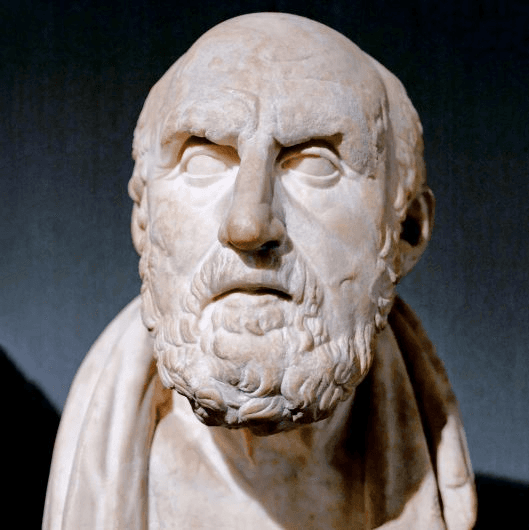
Chrysippus of Soli (c. 279–206 BC) was a Greek Stoic philosopher and the third head of the Stoic school, earning the title 'Second Founder of Stoicism' for his systematic development of Stoic doctrine. Born in Cilicia, he lost his inherited wealth to royal confiscation and came to Athens where he became a student of Cleanthes. An extraordinarily prolific writer who composed over 705 works, Chrysippus excelled in logic, physics, and ethics, creating an original system of propositional logic that wouldn't be surpassed until the modern era. He developed sophisticated theories about fate and free will, arguing that while all things happen according to fate, humans still bear moral responsibility through 'co-fated' events. His work on the therapy of emotions, particularly in 'On Passions,' taught that wrong judgments become overwhelming emotions when they gather momentum, requiring advance preparation and rational analysis to overcome.
Life Story
Early Life and Loss of Fortune
Chrysippus was born around 279 BCE in Soli, Cilicia (modern-day Turkey), presumably of Phoenician descent. He was the son of Apollonius of Tarsus and grew up in a wealthy family with substantial inherited property. Despite his slight stature, Chrysippus was known to have trained as a long-distance runner, developing the physical endurance that would later serve him well in his intellectual pursuits.
His comfortable early life took a dramatic turn when he was still young. His substantial inherited property was confiscated to the king's treasury—likely during the conflicts between Ptolemy II Philadelphus and Antiochus I Soter over control of Cilicia. This sudden loss of wealth forced Chrysippus to leave his homeland and seek his fortune elsewhere, ultimately leading him to Athens, the intellectual center of the Greek world.
Student of Cleanthes
Arriving in Athens with little more than his intellectual gifts, Chrysippus became a disciple of Cleanthes, who was then the head (scholarch) of the Stoic school. He is also believed to have attended courses at the Platonic Academy under Arcesilaus and his successor Lacydes, giving him exposure to different philosophical traditions that would later inform his systematic approach to Stoicism.
Chrysippus threw himself eagerly into the study of the Stoic system, quickly gaining a reputation for learning among his contemporaries. He was noted for his intellectual audacity and self-confidence, famously requesting of Cleanthes: "Give me the principles, and I will find the proofs myself." This bold statement revealed both his confidence in his own abilities and his systematic approach to philosophical reasoning.
The Prolific Writer
Chrysippus was extraordinarily prolific as a writer, reportedly composing more than 705 works and rarely going a day without writing 500 lines. His desire to be comprehensive meant that he would often take both sides of an argument to explore all possibilities, though his opponents accused him of filling his books with quotations from others. Despite being considered sometimes diffuse and obscure in his utterances and careless in his style, his intellectual abilities were highly regarded.
His comprehensive approach to philosophy was both a strength and a weakness. While it made his work thorough and systematic, it also made it difficult for students to follow, even within the Stoic school itself. The linguistic orientation and complexity of Chrysippus's work created challenges for later generations trying to understand and transmit his teachings.
Leadership of the Stoic School
When Cleanthes died around 230 BCE, Chrysippus succeeded him as the third head of the Stoic school, a position he would hold until his own death in 206 BCE. Under his leadership, the school flourished and Stoicism became one of the most influential philosophical movements in the Greek and Roman world. His systematic development of Stoic doctrine earned him the title of the "Second Founder of Stoicism."
Chrysippus excelled in all three branches of Stoic philosophy: logic, physics, and ethics. He created an original system of propositional logic to better understand the workings of the universe and humanity's role within it. His work in logic was so advanced that it wouldn't be surpassed until the modern era, and his contributions to the theory of knowledge, ethics, and physics were equally groundbreaking.
Systematic Philosophy
Chrysippus insisted on the organic unity of the universe and the correlation and mutual interdependence of all its parts. Following Zeno, he determined that fiery breath or aether was the primitive substance of the universe, with objects made up of inert matter given form by an informing soul called "pneuma." This pneuma pervades all substance, maintains the unity of the universe, and constitutes the human soul.
He developed sophisticated theories about fate and free will, arguing that while all things happen according to fate, human beings still bear moral responsibility for their actions. His concept of "co-fated" events attempted to reconcile determinism with human agency—our actions are predetermined and causally related to the overarching network of fate, but the moral responsibility of how we respond to impressions remains our own.
Logic and Mathematics
Chrysippus made groundbreaking contributions to logic, creating an original system of propositional logic that was far ahead of its time. He developed sophisticated theories about conditional propositions and syllogistic reasoning that wouldn't be matched until the modern era. His work on the nature of truth and the relationship between language and reality laid important foundations for later philosophical development.
In mathematics, Chrysippus engaged with complex problems about infinity and continuity. He notably responded to Democritus's paradox about dividing a cone, arguing that the surfaces produced are both equal and unequal—effectively anticipating principles of modern infinitesimal calculus. He also controversially claimed that "one" is a number, challenging traditional Greek mathematical thinking.
Ethics and the Therapy of Emotions
Chrysippus taught that ethics depended on physics, stating that there was no better way of approaching questions of good and evil than through understanding "the nature of all things and the administration of the universe." He believed the goal of life was to live in accordance with one's experience of the actual course of nature, recognizing that individual human nature is part of the nature of the whole universe.
He wrote extensively on the therapy of emotions, particularly in his work "On Passions." Chrysippus viewed the passions as diseases that depress and crush the soul, arising from wrong judgments that gather momentum like a person who has started running and finds it difficult to stop. He taught that one must prepare in advance and deal with passions in the mind as if they were present, using reason to understand the harm they cause.
Death and Legacy
Chrysippus died around 206 BCE at the age of 73, reportedly from laughter after seeing a donkey eating figs and exclaiming that the donkey should be given wine to wash them down. Whether this account is accurate or not, it reflects the ancient appreciation for his wit and intellectual playfulness. His death marked the end of an era for the early Stoic school.
Although none of his works have survived intact except as fragments, Chrysippus's influence on Stoicism was immense. He systematized and expanded the fundamental doctrines established by Zeno and Cleanthes, creating the comprehensive philosophical system that would influence centuries of thinkers. His work made Stoicism one of the most successful and enduring philosophical movements in the ancient world, with effects lasting well into the Roman period and beyond.
Watch: Learn About Chrysippus
Discover the life and philosophy of Chrysippus of Soli through this engaging documentary
Loading video...
Documentary about Chrysippus of Soli
Key Quotes & Philosophy
"Give me the principles, and I will find the proofs myself."
This bold statement to his teacher Cleanthes reveals Chrysippus's intellectual confidence and systematic approach to philosophy. It demonstrates his belief that with proper foundational principles, rigorous reasoning could establish all necessary philosophical truths. This attitude exemplified his role as the systematizer of Stoicism, taking the basic insights of Zeno and Cleanthes and developing them into a comprehensive philosophical system.
"The goal of life is to live in accordance with one's experience of the actual course of nature."
Chrysippus refined the Stoic understanding of living according to nature by emphasizing that we must base our ethics on actual observation and experience of how the universe operates. This wasn't abstract theorizing but practical wisdom grounded in understanding the real patterns and processes of the natural world. Our individual nature as rational beings is part of the larger cosmic nature.
"There is no other or more appropriate way of approaching the subject of good and evil, or the virtues, or happiness than from the nature of all things and the administration of the universe."
This quote from his 'Physical Theses' demonstrates Chrysippus's belief that ethics must be grounded in physics—our understanding of how the universe actually works. Moral philosophy cannot be separated from our understanding of cosmic order and natural law. True ethical living requires comprehending our place in the rational structure of reality.
"Wrong judgments turn into passions when they gather an impetus of their own, just as, when one has started running, it is difficult to stop."
This insight from his work 'On Passions' reveals Chrysippus's sophisticated understanding of human psychology. He recognized that emotions begin as intellectual errors but can develop momentum that makes them difficult to control through reason alone. This is why he emphasized the importance of preparing in advance and training the mind to recognize and correct false judgments before they become overwhelming passions.
Works & Influence
Notable Works
On Passions; Logical Questions; On Providence
Influences
Cleanthes; Zeno of Citium; Arcesilaus
Frequently Asked Questions
Common questions about Chrysippus of Soli and their philosophical teachings, answered with historical context and practical insights.